I went into ‘The Last Bookshop’ in Oxford the other day,
which sells what I assume (?) are remaindered books, since everything in the shop,
regardless of size or original price, is sold for two pounds. I buy books regularly
enough that I don’t feel guilty about getting them cheap from time to time: and anyway
the selections here are sometimes more interesting than what is to be found in the chains.
Which proved to be the case as I pounced with delight upon this:

It’s the third in a series of horse
books for children, 'The Horses of Oak Valley Ranch', by Jane Smiley, the Pulitzer Prize-winning author of ‘A Thousand Acres’. I have the first two in the US hardcover
editions: ‘A Good Horse’ and ‘The Georges and the Jewels’. Faber and Faber in
the UK have changed these titles - in a way that links them more clearly as a series - to the more generic ‘Secret Horse' and ‘Nobody's Horse’. ‘Mystery Horse’ is called
‘True Blue’ in the States, and there are two more, which I look forward to reading.
 |
| US title/cover |
 |
| UK title/cover |
Take a look at the UK cover of 'Mystery Horse' - the gorgeous galloping grey horse against the blue sky, with a blue foil title,
and little blue and pink foil flowers scattered around. Any pony-mad child
would want it. And then – well, then
they might find this is more than your average pony story.
Set in 1960’s California,
the books follow the story of a young girl, Abby, growing up in a
fundamentalist Christian family. Her father is a horse trainer and dealer, and
Abby spends much of her free time outside school helping him work with the
horses. Her mother and father are loving parents but her father in particular
is unbending in his outlook, and her elder brother Danny has left home after a bitter row.
Smiley’s treatment of the family and its predicament is
sympathetic and nuanced. As Abby is the
narrator, we see her father through her eyes: stubborn, hardworking, fair
according to his lights, rigid in his beliefs but – over the course of the
first three volumes – able finally to compromise and come to terms with his son’s
independence. In the meantime Abby
begins to navigate her own way through life. Observing her father’s strengths
and weaknesses, she learns how to trust herself, to question her parents’ views
without loss of love or respect, and to come to her own conclusions.
 |
| US title/cover |
 |
| UK title/cover |
And YES, there is a lot about horses. Horses, Smiley
suggests, are much like people. When her father, a church elder, wants to
discipline the disruptive young sons of a church family, Abby points out that
whipping a child can be as counterproductive as whipping a horse:
“I think they [the boys] are like
Jack, not like Jefferson. If we whipped Jack,
it wouldn’t make him stop running. It
would make him run faster. If we whipped
Jefferson, he might not run at all. He might just stop and buck.”
Mom reached over and smoothed my hair. Dad didn't say anything, and we drove the rest of the way home.
As if all this wasn’t enough, ‘Mystery Horse’/’True Blue’ is
also a remarkably good ghost story: unsettling, spooky, beautiful and
ultimately all about Abby – so that
the ghostly bits are integral to the narrative and not some tacked-on extra
thrill.
As an adult, I love these books. I love the detailed and
thoughtful accounts of grooming, training and riding these horses which –
because they are all for sale – often don’t even have individual names, in case
anyone gets too attached to them. I love the fact that there
can be whole chapters set in church – the ‘church’ which is all this small
faith group can afford, a featureless rented space in a shopping mall. I love the thoughtfulness with which Jane
Smiley navigates Abby’s world. The ways
in which school and home life clash: textbooks which mention evolution and therefore
cannot be shown to Daddy, or Mom’s horror on discovering that in a history
lesson, Abby has been constructing cardboard models of Spanish missions.
‘“You built a Catholic
mission?”
“We all did.”’
It’s done with
a light, almost comedic touch, but can become serious. ‘“So,” said Daddy' [to
Daniel, at the beginning of their quarrel]. “Some boys who taught you to take the holy name of the Lord in vain
are going to pick you up and take you to see a fantasy movie about evil and
hate. Am I right?”’ Other kids are
allowed to go to movies and listen to the Beatles. Abby doesn’t exactly miss these
activities, but she knows that not having them makes her different.
I love all of this. But would a child?
Well, it depends on the child. And this is where the title for this post
comes in. Genre fiction has an
undeserved bad name. Horse and pony books. School stories. Crime. Romance. Historical novels.
Science fiction. Fantasy. Children’s books. If you can put it in a category, it must
somehow be less than a ‘real’ novel.
‘It’s just a pony book.’ ‘It’s
just a school story. ‘It’s just a
romance.’
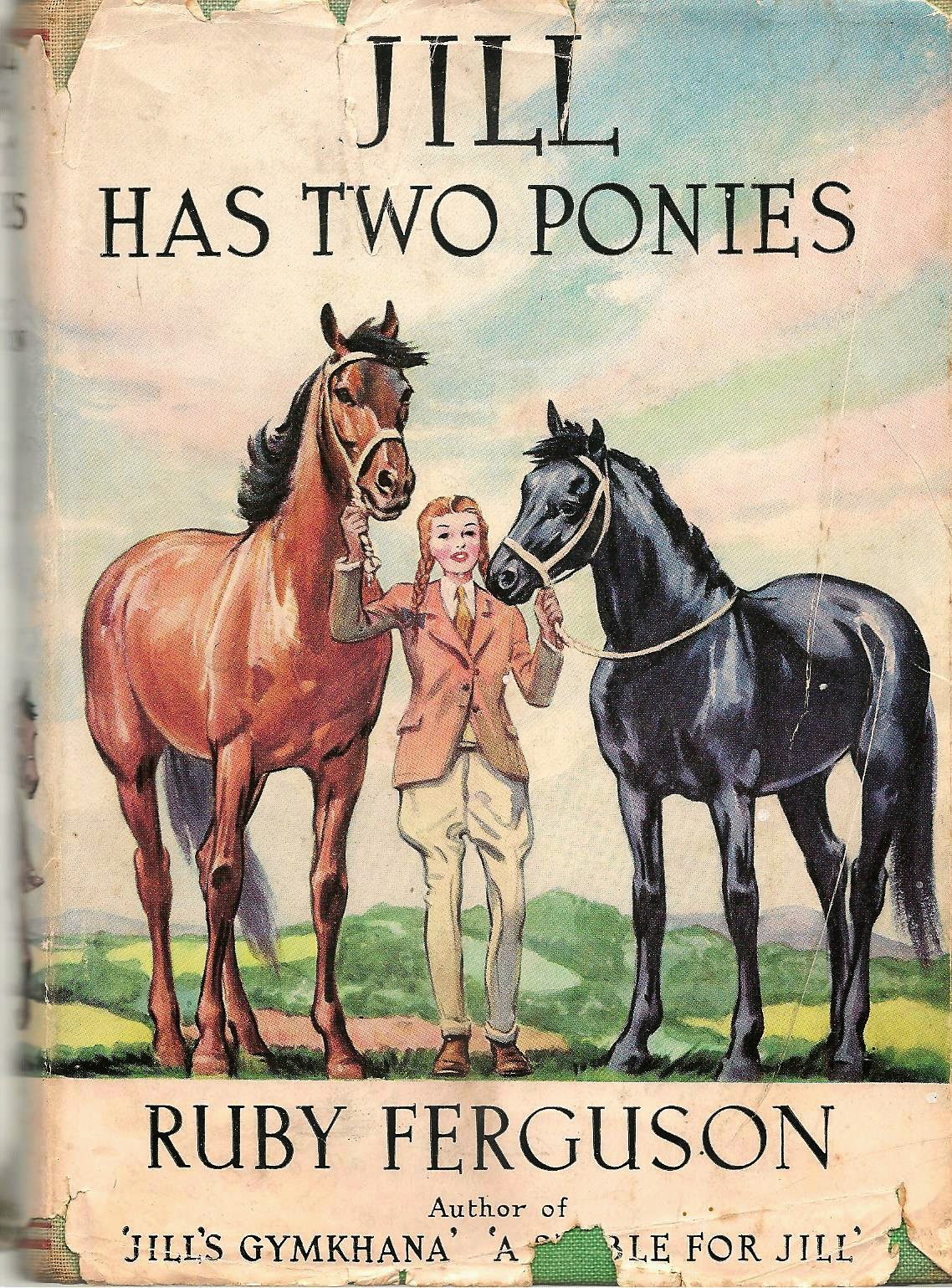
It’s true that there are many pony books, school stories
or adventure stories which are hardly great literature, however that may be
defined. But not every plain old novel is great literature either. I’m not
denigrating the many, many pony books I read as a child just because, as an adult, I no
longer find them so interesting. The ‘Jill’ books by Ruby Ferguson, for example,
kept me enthralled when I was ten or eleven. They are fun, they are lively. They do one single thing:
tell an entertaining story and tell it well.
That is good in itself.
But there are books which do more, which are
multi-dimensional. Mary O’Hara’s ‘My Friend Flicka’ and ‘Thunderhead’ and
‘Green Grass of Wyoming’ are multi-dimensional. They offer a richness – of
characterisation, of description, of emotional intelligence – which the ‘Jill’
books don’t have and never aspired to.
KM Peyton’s ‘Flambards’ and ‘Fly
By Night’ and ‘The Team’ are multi-dimensional. In the genre of ‘school story’,
Enid Blyton’s ‘Malory Towers’ and ‘St Claire’s’ stories offer the child reader excellent ripping
yarns, unashamed fantasies of the fun and frolics of boarding-school life. But
Antonia Forest’s school stories ('Autumn Term' and its sequels) are multi-dimensional. They offer more: depth
of character, growth, change, consideration of topics such as religion,
censorship, responsibility, and the unwitting cruelty of schoolchildren to
persons they dislike.

And yes, I loved all of them indiscriminately, but the ones I read and reread
and have kept reading into adult life are the multi-dimensional books. I knew even back at the age of eleven or
twelve or thirteen that I was getting far, far more out of ‘My Friend Flicka’
than I was getting out of ‘Jill’s First Pony’.
Mary O’Hara was talking about stuff that was important to me. My father and my brother, much as they loved
each other, used to argue. There were misunderstandings, jealousies, quarrels which
sometimes burst around us with the violence of a thunderstorm. In ‘My Friend Flicka’ and its
sequels, the dreamy boy Ken and his impatient, practical father are also
negotiating a difficult relationship punctuated by storms. That story intertwines with the story of
Ken’s love for his little horse, and is equally important.
Maybe some children don’t like these multi-dimensional
books, maybe some children – perhaps even many children? – become bored,
impatient, wanting simply to get on with the story. But there will be other
children who want more, who are already thinking, already asking questions about
life, who will appreciate finding these questions taken seriously in the
middle of a book ‘about’ horses or school. A multi-dimensional book always gives the reader
more than they expected.
Am I simply saying that genre books can be good novels? Of course I am. But it’s more than that. It’s a plea.
The next time you read an excellent horse story or school story or
fantasy, try not to say in its praise, ‘It isn’t just a pony book/school story, of
course…’ as if somehow it needs to be extracted from its lowly niche before it
can be appreciated. Worse still, don’t
say, ‘It’s not really a pony book/school story/children’s book at all!’
Because if you do, if everyone who ever reads and loves a ‘genre’ book
feels they have to rescue it from its category before praising it,
then what is left? Every category of books – novels,
children’s fiction, popular science, you name it – contains a multiplicity of less or more able writers, and we should remember it's better do something simple and do it well, than to aim high and fail. If
somebody says, as someone recently said to me, ‘But Ursula le Guin’s books
aren’t really fantasies’, how is that a compliment to le Guin, who chose to
employ her wonderful talents in the field of sci-fi and fantasy? All it
really proclaims is the reader’s embarrassment at having enjoyed a
book belonging to a genre which they believe - in spite of the evidence before their eyes - to be second-rate.
Either we need to do away with categories and genres
altogether – which isn’t going to happen – or we need to stop being
embarrassed and apologetic, and be ready to recognise and celebrate good work in whatever field it happens to grow. Loud and clear: there are excellent pony
books, there are excellent school stories, there are excellent fantasies, and there are excellent children’s
books. Their excellence is no different
in kind from that of any other writing. So, yes! Unsurprisingly, Jane Smiley's series of horse
stories is truly excellent. Any child or adult who picks them up will learn much – about horses,
and about life.


