Wednesday, 3 October 2018

The Night She Dreamed of Being a Dental Assistant


I won't even go into what else has been happening in the past week, but two notable things occurred in the world of science. Firstly a Cern physicist, Alessandro Strumia – who really looks young enough to know better – was suspended for making the deliberately provocative claim that "physics was invented and built by men”, that "men prefer working with things and women prefer working with people" and that there is "a difference even in children before any social influence" can take place. The lofty heights of physics, he implies, are not for women.  

Secondly, in one of those serendipitous coincidences, the Nobel Prize in Physics was awarded to a woman for the first time in 55 years. Canadian physicist Donna Strickland is only the third woman winner of the award, along with Marie Curie, who won in 1903 and of whom presumably even Professor Strumia may have heard – and Maria Goeppert-Mayer, a theoretical physicist who was awarded the prize in 1963 for proposing the nuclear shell model of the atomic nucleus.

Let me show you something.


I’ve been saving this horror up for some time. It’s an educational ‘Wonder Book’ for children, published in the USA in 1959 with the laudable intention of reducing the childhood terror of going to the dentist. It’s full of cosy, colourful pictures and there is a total lack of any drama. As a nine-year old kid who once leaped out of a car to avoid a visit to the dentist, hid from my parents in bushes in a park and subsequently caught the bus home on my own, I can appreciate this aim… but let us follow Kathy and Clifford on their adventure.


On page one, Clifford – who looks about six – loses a front tooth. ‘Everyone, including Clifford, laughed.’ This is only a baby tooth, but it prompts Daddy to tell Clifford he should put the tooth under his pillow, ‘and maybe there will be a present there in the morning’. (There will be a shiny new dime, though no mention of anything frivolous like tooth fairies). And Mommy remembers, ‘It’s time we saw Dr Moyers to have Clifford’s teeth checked. It would be a good idea to have Kathy’s teeth checked too.’ Notice how Kathy is an afterthought and everyone is looking at Clifford. Everyone looks at Clifford on the cover illustration too. And below, Kathy looks on as Clifford discovers his dime...


A week later, the children and Mommy arrive at the dentist’s. “Who is this pretty little girl?’ asks dental assistant Miss Turner. “This is my daughter Kathy,” says Mommy. “She is three years old and Dr Moyers is going to examine her teeth too.” Even though Kathy is for once the subject, in the picture Clifford is still the focus of attention. His hand is out, and since he is speaking to Miss Turner, it appears very much as though she is looking at him while Kathy stares up, dumb.


Miss Turner wears no glasses to greet the children, but she has to put them on for work, no matter whether close-up or distant – because wearing glasses makes a woman look serious. Here she is in one of only three pictures in the book in which Kathy is the focus. Even then it's not entirely clear whether she's looking at Kathy, or her notes. 


Clifford is the first to go in. He sees ‘a bright sparkling room with all kinds of wonderful machines.’ American hero Dr Moyers smiles and shakes hands with Clifford in a man-to-man fashion. ‘Sit down in the chair,’ he says, ‘and I’ll give you a ride.’ Clifford climbs into the chair with a giggle, ‘pretending that he was about to blast off in a space ship.’ 


In the next few pages, Dr Moyers carefully explains to Clifford everything he is doing. He finds a small cavity.  Then he asks Miss Turner to take an X-ray or six, finds a second cavity and decides to remove two more baby teeth to allow Clifford’s adult teeth to grow straight. He gives Clifford advice on dental hygiene. Miss Turner mixes the dental cement. In the left-hand picture, below, the 'space' references are clear. The X-ray pictures look like an antenna while Clifford is the astronaut in his chair.


Pretty soon Clifford has two more teeth in his chubby little hand. He looks thrilled. Two more shiny dimes!


Now it’s Kathy’s turn. Although she’s only three, Dr Moyers still takes X-rays of her teeth, but they are perfect (at three years old you’d hope so), so all he needs to do is polish them. 


Kathy doesn’t fantasise about space ships or notice shiny machinery, but she does wish she had a ‘toothbrush with a motor’ at home. Dr Moyers provides more good advice on daily dental hygiene (‘Brush your teeth in the morning, then right after meals and before you go to sleep’) and the children trot off, happy to have been given new toothbrushes and medals ‘for being good patients.’ Notice how the artist makes Clifford look straight at the reader with a cheerful gappy grin. Kathy admires her good conduct badge with sweet expression and lowered eyes.


Though this book does a good job of carefully explaining dental procedures to children, it is very much of its time. The thing that really gets me, though - and the reason I feel this book is pernicious - comes on the last page where we see the children snuggled up in bed after their adventurous day,  Clifford in the foreground, of course. “That night,” the story continues:

That night, Kathy dreamed she was a dental assistant. She helped with the X-rays and developed the pictures. She mixed cement and silver for the fillings. She got the instruments ready for the Doctor.


"She got the instruments ready for the Doctor." This is a book in which the little boy is older, the little girl younger. The boy sees exciting shiny machinery and imagines himself a spaceman. The little girl imagines herself a dental assistant. The boy has to be brave, have teeth drilled and extracted, is rewarded with dimes. The little girl follows in her brother’s footsteps and nothing particular interesting happens to her. The insidious, subliminal message would have sunk into the perceptions of children of both sexes, manipulating, and in the case of girls limiting, their expectations.

 
The book is nearly sixty years old. I feel sure the people who put it together felt fine about suggesting ‘dental assistant’ instead of ‘dentist’ as a possible career for a girl, even though women had been getting medical degrees in the States for 110 years already, ever since Elizabeth Blackwell's in 1849. They didn't see that. It wasn't relevant. Even on the cover, the male Doctor is in the foreground, his attractive female assistant remains in the background, smiling and supportive. This was the kind of myopic cultural fog in which most women over the age of fifty grew up and its effects are quite clearly still with us. The events of this week along with many another - just yesterday I heard a Conservative Party donor, Lord Ashcroft, speak unthinkingly of  'the voter and his family' - show how far we still have to travel. For it's certain that Lord Ashcroft is not alone in thinking of a voter as a man. A man and his vote, a man and his family. 


Thursday, 27 September 2018

Fairy- and folk-tales at the BBC Proms


I promised I would be writing more on this blog this summer, instead of which I'm in the middle of writing another book. And there have been other very pleasant interruptions, such as being asked to speak at one of the Proms Extra talks - this was in conjunction with a performance of some of Ravel's most gorgeous fairy-tale inspired music: Contes de ma mère l'Oye, Scheherezade, and L'Enfant et les Sortileges, under the baton of Simon Rattle. In the photo above, there's myself on the right and the composer Kerry Andrew in the middle, doing sound checks with presenter Rana Mitter before the talk in Imperial College Student Union Hall, close to the Albert Hall. Kerry's debut novel 'Swansong' is based on a Scottish fairy ballad, and here she is performing outdoors, live, a wonderful version of the folksong 'The Cutty Wren'.


It was lovely to meet her, and once we got started up there on the platform we could probably have gone on talking all night... If you'd like to hear us, click the BBC iplayer link, here: 
https://www.bbc.co.uk/radio/play/p06j2938

I will posting more regularly again, now autumn's here.


Tuesday, 29 May 2018

Seven Miles of Steel Thistles and GDPR: a note

When you open this blog you should be greeted by a Google message which reads as follows:

This site uses cookies from Google to deliver its services and to analyse traffic. Your IP address and user agent are shared with Google, together with performance and security metrics, to ensure quality of service, generate usage statistics and to detect and address abuse.

In addition to this I should like to assure followers that this is a non-commercial blog. As owner,  I make no use of any data you may have had to provide to sign up. I have not and never will contact any follower or reader, outside of the public conversation, via comment and reply, visible at the foot of each post.

Thursday, 30 November 2017

Seven Miles of Steel Thistles, reviewed by Jacqueline Simpson


Good reviews are always lovely to receive, but sometimes you receive one which means more than most. This, from the almost legendary Jacqueline Simpson, sometime President of the Folklore Society, Visiting Professor of Folklore at the Sussex Centre of Folklore, Fairy Tales and Fantasy at the University of Chichester, collaborator with Terry Pratchett on The Folklore of Discworld and co-author with Jennifer Westwood of The Lore of the Land: a Guide to England's Legends, from Spring-heeled Jack to the Witches of Warboys - is truly special. So here it is, from the latest issue of 'Folklore' and please forgive me for a little trumpet-blowing.


Seven Miles of Steel Thistles: Reflections on Fairy Tales. By Katherine Langrish. Carterton,
Oxfordshire: Greystones Press, 2016. 292 pp. £12.99 (pbk). ISBN 978-1-91112-204-3

‘Fairy tales’, writes Katherine Langrish, ‘are emotional amplifiers . . . [They] work as music does,directly on our feelings’ (197). This collection of her essays (plus three poems) illustrates the psychological subtlety and poetic force of her own responses, and will surely guide readers towards similar sensitivity. She can also, on occasion, cast light on relationships of sources and analogues, notably in her discussion of the ballad of ‘The Great Selkie of Sule Skerry’ (158–87), but her main concern is usually with the deeper themes which she perceives as underlying fairy-tale plots—such themes as time, hunger, death, and rebirth. Alongside these, she can provide sudden sharp insights and speculations which even if unprovable will remain memorable and interesting. For example, in an essay on water spirits she wonders whether the fact that a stick plunged into water will appear broken although it is in fact unharmed could have inspired the prehistoric custom of bending or breaking weapons before throwing them into sacred pools (262). She boldly tackles even the apparently distasteful tale of ‘The Juniper Tree’, which ‘acknowledges terrible evil but ends in hope’ and which ‘haunts’ her (145). Of course, one’s own responses may not always match hers; for example, she has never met anyone who likes the tale of ‘Bluebeard’ (198),whereas I enjoyed it as a child—largely, as I recall, for Sister Anne’s recurrent rhyming reply, ‘Je voie l’herbe qui verdoit et la route qui poudroit’ (I see green grass growing, and on the road dust blowing). We are all subjective readers, and I am grateful to Katherine Langrish for showing how fruitful this can be.

Her writing throughout is elegant, vivid, and frequently witty; there is much pleasure, as well
as much information, to be obtained from Seven Miles of Steel Thistles.

Jacqueline Simpson, The Folklore Society, UK
© 2017 Jacqueline Simpson


Saturday, 25 November 2017

"It's not just an [insert genre] book..."


I went into ‘The Last Bookshop’ in Oxford the other day, which sells what I assume (?) are remaindered books, since everything in the shop, regardless of size or original price, is sold for two pounds. (If not remaindered, the deal is a disgraceful one.) I buy books regularly enough that I don’t feel guilty about getting them cheap from time to time: and the selections here are often more interesting than what is to be found in the chains. Which proved to be the case as I pounced with delight upon this:

It’s the third in a series of horse books for children, 'The Horses of Oak Valley Ranch', by Jane Smiley, the Pulitzer Prize-winning author of ‘A Thousand Acres’.  I have the first two in the US hardcover editions: ‘A Good Horse’ and ‘The Georges and the Jewels’. I do wish same-language publishers would keep to original titles, but Faber & Faber in the UK has changed them to the more generic ‘Secret Horse' and ‘Nobody's Horse’, and in the process designed covers that practically guarantee no-one except pony fanatics will ever read them. The US covers are way classier. But that's publishers for you. And who knows if any of them sold well?
 
I mean, take a look at the UK cover of 'Mystery Horse' –‘True Blue’ in the States –  the gorgeous galloping white horse against the blue sky, with its blue foil title and little blue and pink foil flowers spangled around. Any pony-mad child would want it. But then, well, then they might find this is more than your average pony story.  

US title/cover
UK title/cover
Set in 1960’s California, the books follow the story of a young girl, Abby, growing up in a fundamentalist Christian family. Her father is a horse trainer and dealer, and Abby spends much of her free time outside school helping him work with the horses. Her mother and father are loving parents but her father in particular is unbending in his outlook, and her elder brother Danny has left home after a bitter row.  

Smiley’s treatment of the family and its predicament is sympathetic and nuanced.  As Abby is the narrator, we see her father through her eyes: stubborn, hardworking, fair according to his lights, rigid in his beliefs but – over the course of the first three volumes – able finally to compromise and come to terms with his son’s independence.  In the meantime Abby begins to navigate her own way through life. Observing her father’s strengths and weaknesses, she learns how to trust herself, to question her parents’ views without loss of love or respect, and to come to her own conclusions.

US title/cover
UK title/cover
And yes, there is a lot about horses. Horses, Smiley suggests, are pretty much like people. When her father, a church elder, wants to discipline the disruptive young sons of a church family, Abby points out that whipping a child can be as counterproductive as whipping a horse:

“I think they [the boys] are like Jack, not like Jefferson. If we whipped Jack, it wouldn’t make him stop running.  It would make him run faster.  If we whipped Jefferson, he might not run at all.  He might just stop and buck.”
Mom reached over and smoothed my hair.  Dad didn't say anything, and we drove the rest of the way home. 

As if all this wasn’t enough, ‘Mystery Horse’/’True Blue’ is also a remarkably good ghost story: unsettling, spooky, beautiful and ultimately all about Abby, so that the ghostly bits are integral to the narrative and not some tacked-on extra thrill.

As an adult, I love these books.  I  love the detailed and thoughtful accounts of grooming, training and riding these horses which – because they are all for sale – often don’t even have individual names, in case anyone gets too attached to them. I love the fact that there can be whole chapters set in church – the ‘church’ which is all this small faith group can afford, a featureless rented space in a shopping mall.  I love the thoughtfulness with which Jane Smiley navigates Abby’s world.  The ways in which school and home life clash: textbooks which mention evolution and therefore cannot be shown to Daddy, or Mom’s horror on discovering that in a history lesson, Abby has been constructing cardboard models of  Spanish missions.

‘“You built a Catholic mission?”   
“We all did.”’ 

It’s done with a light, almost comedic touch, but can become serious. ‘“So,” said Daddy' [to Daniel, at the beginning of their quarrel]. “Some boys who taught you to take the holy name of the Lord in vain are going to pick you up and take you to see a fantasy movie about evil and hate. Am I right?”’ Other kids are allowed to go to movies and listen to the Beatles. Abby doesn’t exactly miss these activities, but she knows that not having them makes her different.

I love all of this. But would a child?

Well it depends on the child.  And this is where the title for this post comes in.  Genre fiction has an undeserved bad name.  Horse and pony books. School stories. Crime. Romance. Historical novels. Science fiction. Fantasy. Children’s books. Murder mysteries. If you can put it in a category it must somehow be less than a ‘real’ novel.  ‘It’s just a pony book.’  ‘It’s just a school story.  ‘It’s just a romance.’


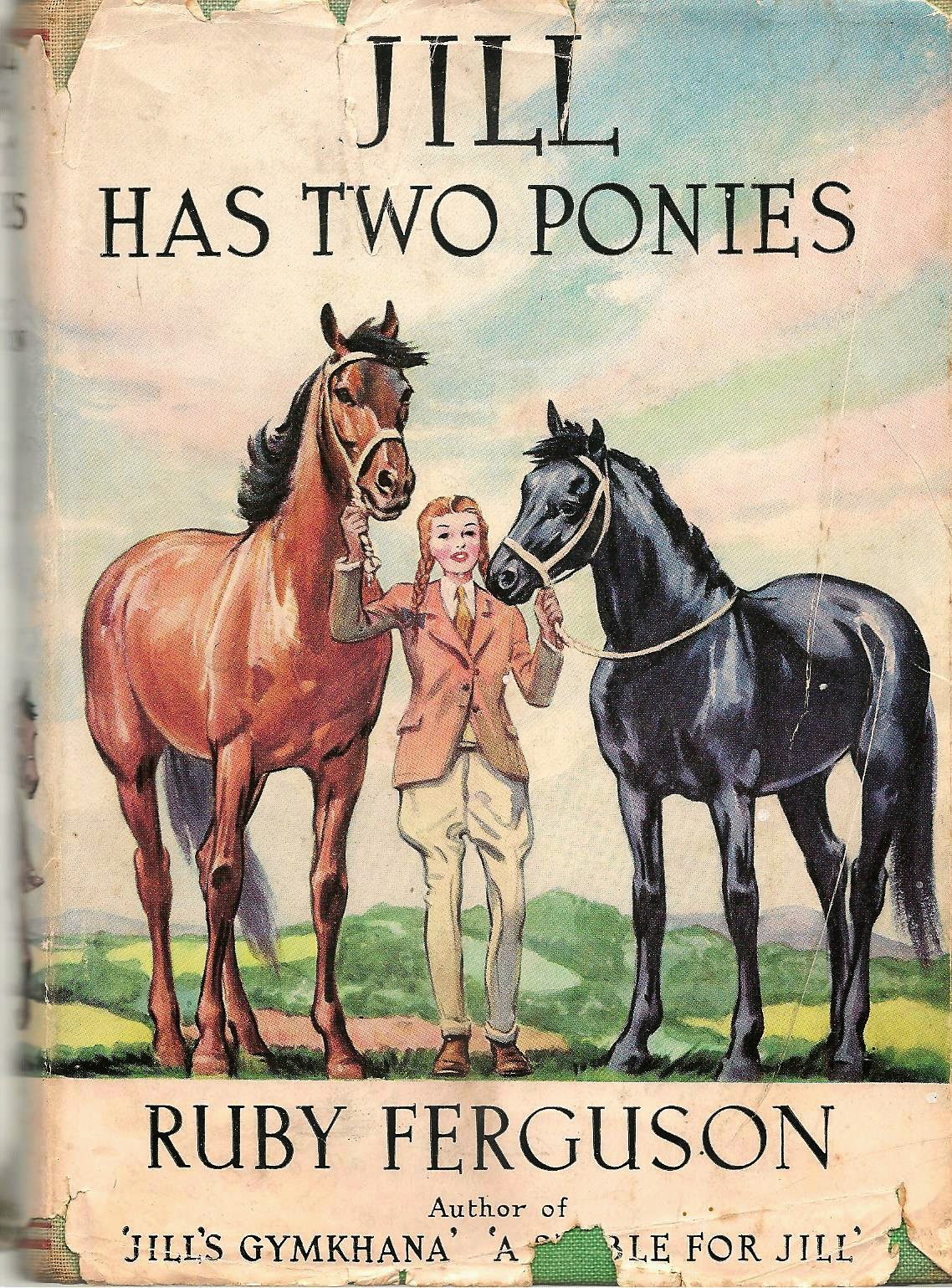
It’s true that there are many pony books, school stories and adventure stories which are hardly great literature – however that may be defined. But not every plain old novel is great literature either. I’m not denigrating the many, many pony books I read as a child just because, as an adult, I no longer find them so interesting. The ‘Jill’ books by Ruby Ferguson, for example, kept me enthralled when I was ten or eleven. They are fun, they are lively. They do one single thing: tell an entertaining story and tell it well.  That is good in itself.

But there are books which do more, which are multi-dimensional. Mary O’Hara’s ‘My Friend Flicka’ and ‘Thunderhead’ and ‘Green Grass of Wyoming’ are multi-dimensional. They offer a richness – of characterisation, of description, of emotional intelligence – which the ‘Jill’ books don’t have and never aspired to.  KM Peyton’s  ‘Flambards’ and ‘Fly By Night’ and ‘The Team’ are multi-dimensional. In the genre of ‘school story’, Enid Blyton’s ‘Malory Towers’ and ‘St Claire’s’ stories offer the child reader excellent ripping yarns, unashamed fantasies of the fun and frolics of boarding-school life. But Antonia Forest’s school stories ('Autumn Term' and its sequels) are multi-dimensional. They offer more: depth of character, growth, change, consideration of topics such as religion, censorship, responsibility, and the unwitting cruelty of schoolchildren to persons they dislike.  

And yes, I loved all of them indiscriminately, but the ones I read and reread and have kept reading into adult life are the multi-dimensional books.  I knew even back at the age of eleven or twelve or thirteen that I was getting far, far more out of ‘My Friend Flicka’ than I was getting out of ‘Jill’s First Pony’.  Mary O’Hara was talking about stuff that was important to me. My father and my brothers, much as they loved each other, used to argue. There were misunderstandings, quarrels which sometimes burst around us like a thunderstorm. In ‘My Friend Flicka’ and its sequels, the dreamy boy Ken and his impatient, practical father are also negotiating a difficult relationship punctuated by storms. That story intertwines with the story of Ken’s love for his little horse, and is just as important.

Maybe some children don’t like these multi-dimensional books, maybe some children – perhaps even many children? – become bored, impatient, wanting simply to get on with the story. But there will be other children who want more, who are already thinking, already asking questions about life, who will appreciate finding these questions taken seriously in the middle of a book ‘about’ horses or school. A multi-dimensional book always gives the reader more than they expected.

Am I simply saying that genre books can be good novels?  Of course I am. But it’s more than that.  It’s a plea.  The next time you read an excellent horse story or school story or fantasy, try not to say in its praise,  ‘It isn’t just a pony book/school story, of course…’ as if somehow it needs to be extracted from its lowly niche before it can be appreciated.  Worse still, don’t say, ‘It’s not really a pony book/school story/children’s book at all!’

Because if you do, if everyone who ever reads and loves a ‘genre’ book feels they have to rescue it from its category before praising it, then what is left?  Every category of books – novels, children’s fiction, popular science, you name it – contains a multiplicity of less or more able writers, and we should remember it's better to do something simple and do it well, than to aim high and fail. If somebody says, as someone recently said to me, ‘But Ursula Le Guin’s books aren’t really fantasies’, how is that a compliment to Le Guin? She chose to employ her wonderful talent in the field of sci-fi and fantasy. That is where she belongs. All it really proclaims is the reader’s embarrassment at having enjoyed a book belonging to a genre which they believe – in spite of the evidence before their eyes – to be second-rate.

Either we need to do away with categories and genres altogether – which isn’t going to happen – or we need to stop being embarrassed and apologetic, and be ready to recognise and celebrate good work in whatever field it happens to grow. Loud and clear: there are excellent pony books, there are excellent school stories, there are excellent fantasies and there are excellent children’s books.  Their excellence is no different in kind from that of any other writing. So, yes!  Unsurprisingly, Jane Smiley's series of horse stories is truly excellent. Any child or adult who picks them up will learn much – about horses, and about life.