Friday, 12 November 2010

Fairytale Reflections (9) Delia Sherman


Delia Sherman is so well known and so active in the US and international fantasy community that she hardly needs any introduction, but I'm doing one anyway because I want to tell you how much I love her books.  And so here it is:  Delia writes historical/folklore/semi-comic fairy stories with a serious twist.  Her short fiction and poetry has appeared in many anthologies.  Her adult novels are 'Through a Brazen Mirror' and 'The Porcelain Dove' (which won the Mythopoeic Award) and, with fellow-fantasist Ellen Kushner, 'The Fall of Kings'.  She has also written two wonderful novels for younger children, 'Changeling' and 'The Magic Mirror of the Mermaid Queen', featuring adventurous, impetuous, warm-hearted Neef, the official changeling of Central Park, who is always getting into scrapes. 

I first met Neef in a story called ‘CATNYP’, in one of Terri Windling and Ellen Datlow’s wonderful anthologies of short stories, “The Faery Reel”.  I was entranced, and rushed out to find the full length novels.  As a changeling child, Neef is ‘kind of bi-cultural, human and fairy’, and her adventures take place in New York City:

Not the one in the ‘I ♥ New York’ posters, but the one that exists beside it, in the walls and crawlspaces and all the little pockets and passages of its infrastructure.  Call it New York Between. 

You always knew that such a place must exist, right?  And naturally the fairy folk who have arrived over the centuries and now inhabit New York Between are diverse, dangerous and dynamic.  Expect to hear the Wild Hunt howling on autumn nights in Central Park, to meet fox spirits and moss women in the woods, and to encounter the odd Fictional Character such as the Water Rat or Stuart Little down by the lake.  Neef has an unpredictable Pooka for a fairy godfather, and a motherly white rat for a fairy godmother. There are mermaids in the harbor, a Dragon on Wall Street, while as for the Green Lady:

When she’s happy, the Green Lady of Central Park is as beautiful as the most beautiful thing you can imagine.  She has greeny-brown skin, long dark-green ropes of hair, and deep-set eyes the color of new leaves after rain.  But she can change shape, and not all of her shapes are beautiful.

As soon as she saw me, her dreadlocks lifted and began to weave around her head and hiss like snakes.  Emerald fire smoldered in her eyes and her lips lifted over teeth grown suddenly needlelike.

“Can the music, boys,” she yelled.  “We have a situation here.”

I love the fun in these books, spiced with danger.  I love the wild but utterly convincing mix of characters and the sense of place - the spirit of New York itself.  (Naturally there will be real swan maidens backstage at the ballet in the Lincoln Center...)  They belong in that long pageant of impressively good children’s books in which New York City plays its part - ‘Roller Skates’, ‘The Cricket in Times  Square’, ‘Harriet the Spy’, and ‘From the Mixed-Up Files of Mrs Basil E. Frankweiler’.  Delia is an active member of the Endicott Studio of Mythic Arts and a founding member of the board of the Interstitial Arts Foundation, dedicated to art found  in between genres and crossing boundaries.  She lives – where else? – in New York City with Ellen Kushner, travels whenever she gets the chance and writes wherever she happens to be.  And her fairytale reflection is  - 


THE SNOW CHILD


When I was a child, I had a book called Fairy Tales of Many Lands, edited by H. Herda and published by Franklin Watts in 1956.  It’s sitting by my desk as I type, its disintegrating cover patched by my mother, some time in the early 60’s, with lavender and blue flowered Contac paper.  It was originally published in German, which explains the extremely idiosyncratic choice of tales (“The Good Shepherd”? “The Gnome’s Advice”? “The Enchanted Hill?”), the unfamiliar artists (Gerhard Grossman?  Hilde Koeppen?  Ursula Wendorff-Weidt?), and the stiff, translated prose.  In any case, I pored over its strange tales and sketchy wash illustrations with the single-hearted obsession of a child in love with a book.  There’s not a single story in there that hasn’t influenced me in some way or another, including the ones I hated (“The Weathercock” and “The Wonderful Coffee Mill,” if you’re curious).  But the one that really got me where I lived was a Russian folk tale called “The Snow Child.

It’s not a well-known story, so here’s a summary:

A childless couple celebrate the first snowfall of winter by sculpting a snow baby.  A stranger walks by, and the snow baby stretches, laughs, and becomes a perfect, pale baby girl with blue eyes and hair like starlight.  The couple, delighted, take her home, put her in their empty cradle, and call her Snowflake.

Snowflake grows quickly into a beautiful, good, obedient, merry child, who helps her mother around the house and is beloved by everyone who sees her.  All winter she laughs and plays with the village children, but when the spring comes, she turns pale and quiet and takes to hiding in shady corners.  Come midsummer, she agrees to go out into the woods to celebrate with her friends.  But when they press her to leap over the midsummer bonfire, she slips away into the woods and heads towards the mountains to the north.

When Snowflake fails to return from the bonfire with the other children, the distracted parents search the forest until the village wise woman tells them to stop. Their daughter was the gift of King Winter, who has undoubtedly taken her back into his frozen kingdom.  They should be grateful for the gift and stop mourning.

In the meantime, Snowflake journeys through the woods, having adventures with a pair of lost bear cubs, turning down an offer to be Queen of a pond of musical Frogs, and sleeping under an oak tree, watched over by kindly giants, squirrels, and dwarves.  She reunites the cubs with their mother and begs a ride from a skeptical eagle, who carries her to his eyrie.  That night, King Winter appears to tell her that she is a snow child, whose real home is a crystal palace behind the moon.  He will take her there, but first she must return to her parents and tell them goodbye.  A flurry of snowflakes carries her back to her village, where she appears to her parents and tells them to be glad for her because she’s going home.  Then the sun rises and she melts and rises as a cloud to heaven.

  
It is, of course, a fable about children dying, right on up there with the death of Little Nell in its sentimental piety.  The oldest versions, referenced in the scholarly literature as tale-type 703, end at the midsummer bonfire, with the snow maiden giving into peer pressure and evaporating up to heaven, leaving everyone to wonder what has become of her.  Another variant has her growing up, falling in love, and melting from the heat of her sweetheart’s first kiss.

I like H. Herda’s version better.  

This Snowflake may be a compendium of Victorian virtues, but she’s anything but passive.  And she’s got a strong sense of self-preservation as well as a good heart.  She runs away from the fire—and the insensitive children who are pressuring her to jump it.  She knows how to catch trout with her bare hands and get honey from a hive.  She’s polite to frogs and wolves alike and she isn’t afraid of flying over ravines and gullies on an eagle’s back.  She’s not afraid to die.

There’s a reason that the spine of Fairy Tales from Many Lands is broken at the illustration of Snowflake in the eagle’s nest, looking longingly at the moon.  As a child, I was asthmatic, at a time when the treatment for asthma was pretty much a hot humidifier and Vicks Vaporub for mild attacks, and the hospital, an oxygen tent, and prayer for more severe ones.  Every time I couldn’t breathe, I was sure I was going to die.   And even though I was all too obviously not good, obedient, pious, industrious, or beloved by all who beheld me, I found hope in Snowflake’s after-evaporation reunion with her brother and sister snowflakes.

The comfort I found in Snowflake’s death is why I’m so appalled by the 20th Century’s cultural redefinition of fairy tales as simplistic, sanitized, happily-ever-after stories of heterosexual romance for children.  Yes, Fairy Tales of Many Lands was published for children, and I can’t read it now without wincing at the slightly twee tone of the prose (“Does this child really want to go up to the sky, this bewitching little child whom no one can resist?”).  And yet the stories confront the bitter side of human relations as well as the sweet, and the protagonists triumph over bandits and malicious friends as well as giants and dragons.  With few exceptions, the girls in these stories are as active and clever as the boys, and their rewards are not restricted to marriage.

Reading the story now, it seems odd to me that I identified so strongly with Snowflake.  Where she revived in the cold, I withered and wheezed.  Where she was slender and dainty and blonde, I was plump and bespectacled and mousy brown.  I was too allergic to animals to have a pet, let alone romp with bears, and couldn’t even play outside at recess, let alone go adventuring in the woods.  I was afraid of heights.  And my parents, while they loved me, did not approach the standards set by old Ivan and Maria.  Yet her story was, on one level, mine.  We were both children adopted by much older parents when we were babies, we were only children, and we were the gift of a stranger.  Neither of us fit the norms of the world we’d been brought into.  Both of us longed for a home we could hardly imagine, among people who not only loved us, but knew and accepted us for what we were.

Snowflake had to evaporate to find her home.  I only had to grow up.

As an author, I have retold “The Snow Child” only once, in a story called “The Printer’s Daughter,” written for the Windling/Datlow fairy tale anthology Ruby Slippers, Golden Tears.  My chance-child is made of paper, not snow, and her adventures take place in the wilderness of Elizabethan London rather than in a Russian forest.  Frisket is a post-modern heroine, fully conscious that she’s not human, always longing to go back to paper and ink.  Which she does, in the end, with the help of a scruffy poet.  It’s one of my favorite pieces of my own fiction, drawing on all the Elizabethan prose I read for my degree in Renaissance studies as well as on “The Snow Child.”  But it’s not the only piece of fiction that story has touched.  Almost everything I write has got a foundling in it somewhere, a child out of place or out of time, raised and loved by those who have no blood kinship with it.  Like Snowflake, each of these foundlings is and is not me, their stories rooted in mine and branching from it, like tributaries from the river that is my drive to write.


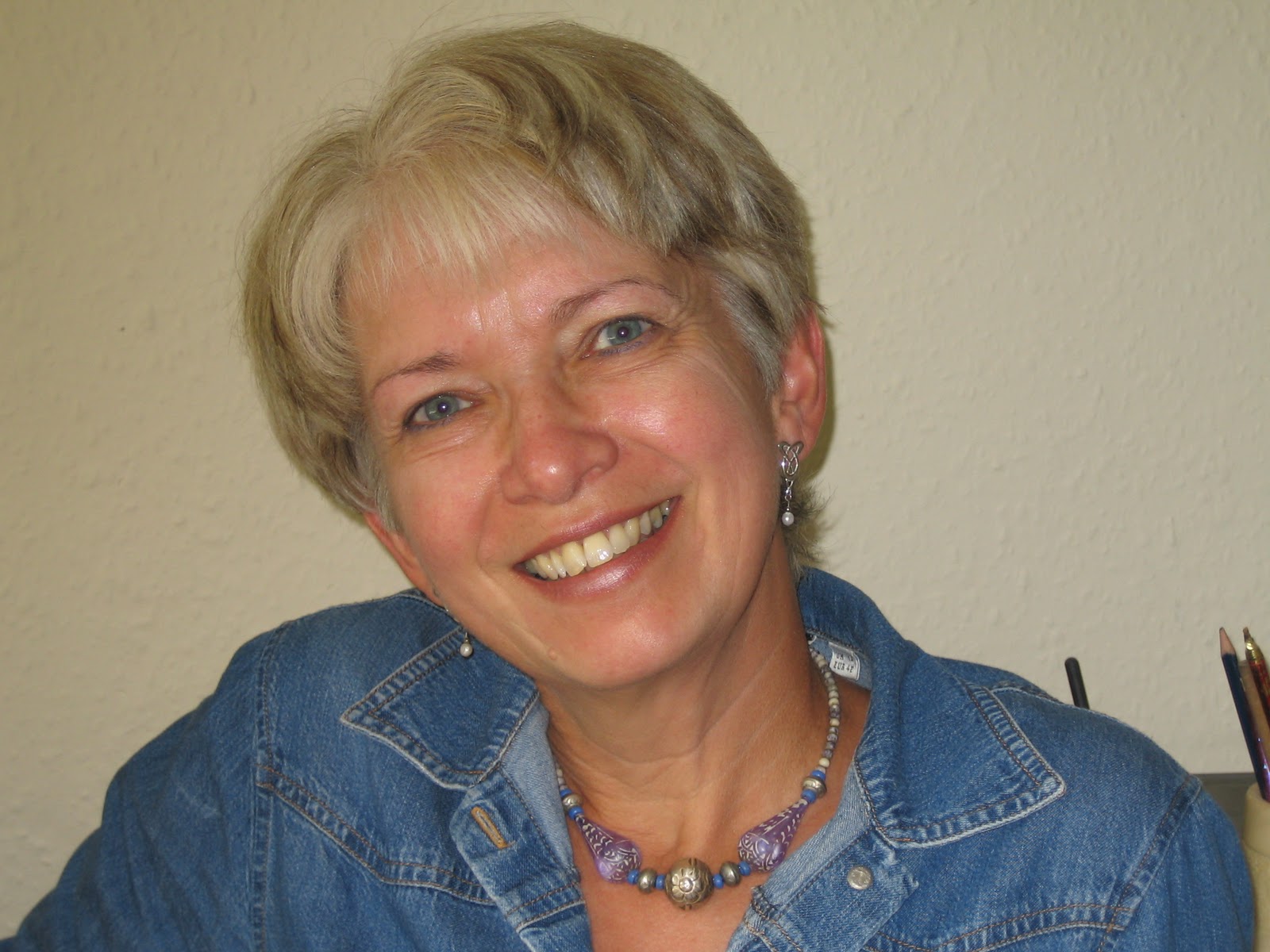
Picture credits: Photo of Delia Sherman by Laurence Tammaccio
Illustration of The Snow Maiden from a painted box by  A Verdernikov, 2000


Friday, 5 November 2010

Fairytale Reflections (8) Sue Purkiss

Sue Purkiss describes her first few stories as ‘ghostie, witch fantasies for young children’. Her next two novels, ‘The Willow Man’ and ‘Warrior King’ are for older children. ‘The Willow Man’ is a contemporary story underpinned by the presence of the mysterious and magical figure of the ‘Willow Man’ or ‘Withy Man’, a huge outdoor sculpture by Serena de la Hey, set in a field near Bridgewater in Somerset. Young Tom is fascinated by the figure, which becomes ever more meaningful for him as he and his family struggles to cope with his little sister Sophie’s sudden stroke. ‘It only happened to one child in fifty thousand’ the doctors say – but Tom can’t help wondering if it happened because he quarrelled with her… And when on top of everything else, his friend Ash goes missing, perhaps the Willow Man can help?

He thought he had closed his eyes, but he could see the sunlight through his eyelids, and then he must have opened them a tiny crack. Or maybe he just thought he had, because he wasn’t sure what he’d seen, or, really, if he’d seen anything. Well, he couldn’t have. He might have seen Sophie hold up the flowers, but he couldn’t possibly have see the Willow Man bend gracefully down and take them. It must have been something to do with the sunlight again – when you stared into the sun with your eyes closed, it did make funny patterns on the inside of your eyelids…

Beautifully, delicately written, ‘The Willow Man’ is about hope and resurgence. And ‘Warrior King’ is a re-imagining of part of the life of Alfred the Great – king of Wessex from 871 to 899, renowned for his learning, for his defence of England against the Danes, and in a legend once famous among schoolchildren, for burning those cakes. Enchantment is present in this book too, in the shape of Cerys, the silver-eyed wise woman.

Sue’s books are grounded in the landscape of Britain, especially the beautiful county of Somerset where she now lives, which contains the original Isle of Avalon, the mysterious Glastonbury Tor, and the misty marshes where Alfred once hid from the Danes. (Her latest book, ‘Emily’s Surprising Voyage’ is a story of Brunel’s spectacular ship the SS Great Britain, now permanently to be found  in Bristol harbour.) I can’t resist quoting this passage from her website, about a visit to Athelney ‘where Alfred made such a botch of baking the cakes’:

There was a low green hill with a stumpy stone monument and apart from that, just a magical landscape, with rows of willows, water birds calling above stretches of floodwater, and in the distance, the iconic outline of Glastonbury Tor. You could see hardly any houses. It struck me that this place had hardly changed in hundreds of years.


As I leaned on the gate looking at the hill – at Alfred’s Athelney – an old man came up to me. “Ah,” he said – and I swear this is absolutely true – “you’ll be looking for Alfred.”

After that it may come as no surprise that Sue’s choice for ‘Fairytale Reflections’ is that tale of hope and transformation -

THE WILD SWANS


I have been a reader of fairy tales at various stages in my life. When my sister and I were small, my mother used to buy us Ladybird books – Cinderella, The Sleeping Beauty, Little Red Riding Hood – always with the same reassuringly familiar format: a page of text on the left, and a full colour, full page illustration on the right. They taught me to read: we read the same books over and over, and one of my earliest memories is of insisting to Dad that tonight, I would read to him. I’d heard the stories so often that I’d memorised them, and begun to link up the printed words with the spoken ones.


Later on, when I really could read, I had a series of little buttercup yellow books, which each featured a single fairy story. I really liked these. I think it was partly because they were miniature: I also liked little teddy bears, dolls’ house furniture, and tiny porcelain animals. I remember reading Beauty and the Beast under the sheets when I was supposed to be asleep. It had lovely pictures. There was one bit where the father brought back a red rose and a white rose from the Beast’s castle. His daughters were astonished to see roses in the middle of winter; such a thing was impossible, and therefore proof of something magical. The roses in my garden often flower late, into November and even December, and when they do, I always feel vaguely surprised – because I know from that story that they shouldn’t.


Later, when I was older, I used to get as many books as I could out of the libraries in town and at school. I read anything I could get hold of, including fairy stories: collections from different countries and Andrew Lang’s series of rainbow fairy books. Then I read a book called The Amazing Mr Whisper, by Brenda Macrow. That was the first story I’d come across where the magical world intruded into the real one: the precursor for me of the Narnia books, Alan Garner, and eventually Tolkien. I was enchanted by the idea that the two worlds could collide, and I think after that I began to drift away from pure fairytales. 


I rediscovered them when I had children of my own. My mother bought more Ladybird books: I bought collections with gorgeous illustrations. The children loved them, as I had done. I remember a friend saying she wouldn’t buy fairy stories for her children: they are full of such terrible things, she said – old ladies pushed into ovens, grannies eaten by wolves, stepmothers poisoning princesses, parents abandoning their children. Well, yes… and yet, these stories endure, as others don’t. (I managed to track down a copy of my beloved Mr Whisper a while ago; it hasn’t worn well, even for me!) Children cope with the cruelty in fairy stories, just as they love the horrors that Roald Dahl’s characters encounter; I think sometimes they are not given enough credit for being able to tell a fictional world from the real one, the one they have to live in.


The Wild Swans, by Hans Christian Andersen, has terrible things in it. But it’s also a story of haunting beauty. This is what happens.


It begins with eleven princes, who write ‘with diamond pencils on golden tablets’ and their little sister, Elisa, who has ‘a picture book that cost half the kingdom’. Their mother is apparently dead, but nevertheless they are happy until their father marries an evil queen, who turns the brothers into swans (they change back to their true forms only at night) and sends Elisa to live with peasants in the country. When she is fifteen, Elisa returns to the court, but the stepmother manages to get rid of her (not without some difficulty, but she’s a resourceful woman). Elisa flees the castle, and find herself in a dark, dark forest. Thanks to a troop of glow worms, another of angels, and a mysterious old woman, Elisa finds her way through the woods to the sea, where she meets up with her brothers. They carry her over the ocean to the country where they live, a place of forests, mountains and castles. As she sleeps, a fairy comes to Elisa in a dream and tells her she can lift the enchantment from her brothers, provided she makes each of them a shirt out of nettles. But she must not speak a word till she has done: if she does, her brothers will die.


            She begins the work, but she has only finished one shirt when  the king of the country comes across her while he is hunting. He falls in love with her, takes her back to his castle, gives her ‘regal gowns’ and has her hair ‘braided with pearls’. They marry, and she falls in love with him too, but is determined to press on with her task. The archbishop, however, believes she is a witch. He follows her one night when, having run out of nettles, she goes to a churchyard to collect more, passing by monsters which feast on the flesh of corpses to do so. The archbishop accuses her of witchcraft, the king can find no other explanation for her trips to the graveyard, and of course she cannot speak: he declares that the people must decide on her fate. They do – they say she’s a witch and must burn. Still she keeps sewing, still she won’t speak. Just in the nick of time, her brothers appear. She throws the shirts over them, and they are transformed into their real selves. (All except the youngest. His shirt is not quite finished, so he is left with a swan’s wing instead of an arm.) Elisa, exhausted, collapses, seemingly lifeless. But then something magical happens: the faggots which had been used to make the pyre suddenly begin to grow, and in no time at all a hedge of beautiful red roses has appeared. At the very top is a single white one. The king plucks it, lays it close to Elisa’s heart, and she comes back to life.


So – terrible things indeed. Some of the elements of this story are to be found in others too. There is the evil stepmother. She has the king: she doesn’t want to be burdened with his twelve children. So they experience the sudden loss of an idyllic lifestyle; they sink from the top of the heap to the very bottom. There is the journey – the quest –  through a forest. Forests, of course, were dangerous. They still are in many places (though not, perhaps, in our small island). In a real forest, you can quickly become disorientated and lose your way, and then you are at the mercy of fierce creatures: wild boar, wolves, and bears. In an enchanted one, there are other dangers too – witches, goblins, sinister trees.


Elisa is beset by dangers from the start. But once she sets about her task, she becomes even more vulnerable; she is not allowed to speak, so she cannot explain or defend herself. The king is kind and he loves her, but even he is a threat to her: he takes her away, without her permission, from where she needs to be. She has to go to the graveyard – it’s the only place she can get fresh supplies of nettles – but in doing so, she lays herself open to the Archbishop’s accusations. Then she falls victim to a mob: one day the people cheer her: the next they jeer and condemn her to a terrible death. The fickle affections of the mob are frighteningly real.


But she is not a passive victim. We know that she is only allowing all this to happen to her because she is ferociously loyal and determined. Even when she falls in love with the king, she still doesn’t allow herself to be distracted. She loves her brothers and she is determined to keep to her commitment to save them, no matter how hard it may be. She may be a victim, but she’s far from weak.


We talk of ‘fairy-tale endings’ as if fairy stories invariably end well. True, in the end Cinderella and her prince live happily ever after. So does the Sleeping Beauty; so does Snow White. But it isn’t always so. In The Wild Swans, one brother is left with a swan’s wing instead of an arm. Perhaps this is one of the things that makes this particular story so poignant; there’s an admission that everything doesn’t always turn out all right, no matter how hard you try. Fairy stories may take place in an enchanted land, but they deal with situations we must face in real life.


There is even something paradoxical about the enchantment. The stepmother wants to turn the princes into ‘voiceless birds’, but her power has its limits, and instead of becoming something ugly, they are turned into ‘beautiful wild swans’. They are no longer princes, and their true lives have been taken away, but still they have been transformed into something wonderful: to borrow from Yeats, ‘a terrible beauty is born’: and they fly across the ocean at sunset to meet their sister like ‘a white ribbon being pulled across the sky’. It’s a lovely image and a lovely moment, as Elisa sees her brothers for the first time in so many long and difficult years.


The Wild Swans is about as far as you can get from the popular Disneyfied construct of what a fairytale is. Like a wild landscape, it is bleak and harsh. But, for me at any rate, it has also a beauty that touches the heart.


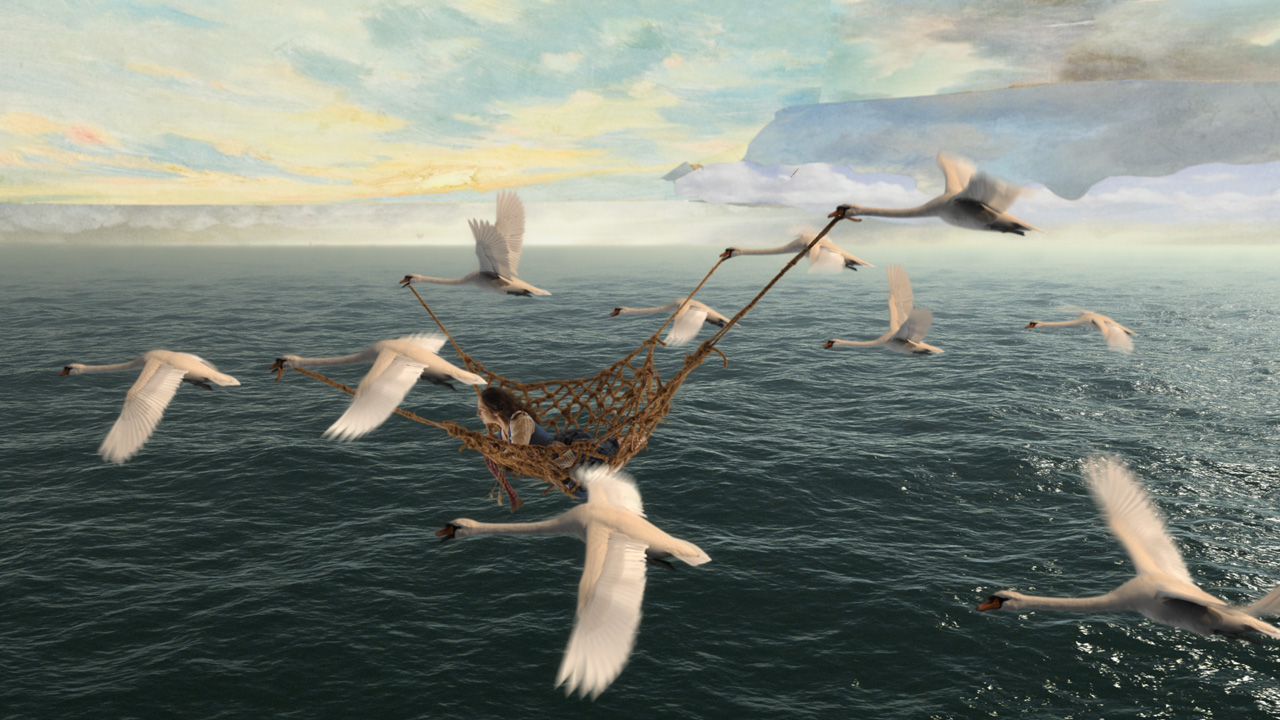
Photo Credit: This decoupage of the Wild Swans is by Queen Margrethe of Denmark - find more about her work at http://wildswansfashion.blogspot.com/2010/03/wild-swans-decoupage-by-queen-margrethe.html

Friday, 29 October 2010

Fairytale Reflections (7) Lucy Coats

My friend Lucy Coats is very tuned in to magic, myth and fantasy – as you might expect from someone who remarks: ‘I was born in a shrubbery nearly half a century ago and have been looking for fairies in the trees ever since.’ She has written over 25 titles for children, the latest of which are the 12 books of her Greek Beasts and Heroes series, published throughout this year by Orion. And it’s partly to Lucy I owe this idea of the ‘Fairytale Reflections’ – inspired by the fascinating ‘Mythic Fridays’ series of interviews on her blog Scribble City Central.

Lucy is, in fact, very very cool. It has to be cool to have your own stone circle, right? Well, Lucy has one. She mentions it on her website quite casually, almost in passing – as though, well, doesn't everyone have one?  She built it herself: seven upright stones surrounding an inner circle of seven trees which are, naturally, the Seven Sacred Trees of Britain. (I’m rather ashamed to say I can't guess all of them. Oak and Ash and Thorn, for sure, but the others...?  Alder?  Willow?  Elm?)

Besides the Greek Beasts, Lucy is the author of the splendidly titled ‘Hootcat Hill’, a vigorous and charming fantasy for older children, set in an ever-so-slightly different version of modern Britain where children learn ‘Frankish’ at school instead of French, and look forward to university at Oxenfoord rather than Oxford. Here, in a little village called Wyrmesbury, young Linnet Perry discovers her true identity as the Maiden, one of the seven Guardians whose duty it is to quell the waking of the dreadful worldwyrm. The Guardians are figures from deep folklore, cleverly reimagined in modern guise, such as 'Wayland Smith' now working as a garage mechanic and panel-beater, or ‘Fay Morgan’ who owns the ‘chymists’ shop on the High Street. Here, they arrive together at Hootcat Hill:


The roar of a powerful motorbike at the foot of the hill drowned out the hooting for a moment and then fell silent. Two figures, one very large, the other considerably shorter and rather plump, came up Hootcat Hill towards the trees. Each made a quick twisting sign as they reached the mist that surrounded the Owlstones…


Fay Morgan wore a green cloak, and she carried a silver cauldron under one arm. Wayland Smith was dressed in bright red bike leathers, embroidered with silver sledgehammers.

The book is written with wit and a light touch. Linnet’s father Merrilin brews experimental beers like the ‘Monster Brew’ which provides the adventurous drinker with (temporary) additions such as horns, fangs, or a forked tail. I’m off to the pub tonight myself, to my brother’s folk music session, and I feel quite sure that ‘Monster Brew’ would go down very well at The Greyhound.

And of course, it’s very nearly Halloween. Not a fact either Lucy or I had noticed, and we didn’t plan it this way, so I can only put it down to the influence of that stone circle that her post this week just happens to be about one of most fearsome witches in faery lore...


BABA YAGA—Wild Witch of the Writing Forest 

The Bear Moon is risen, and here comes the Baba Yaga in her iron mortar, rowing and sweeping, rowing and sweeping, till all that is left behind her is cloud wrack and the crushed black velvet of a midnight sky. That’s how my own Baba Yaga story will start—the one I plan to write this winter when the snow starts to fall.

I can no longer remember where my fascination with Baba Yaga began. It may have been Arthur Ransome and Old Peter’s Russian Tales who introduced me to her, but I think not.  Having a set of Russian cousins probably meant that somewhere, somehow, I was first told of her via whispered under-bedclothes tales of the witch with iron teeth, who lived in a house with chicken legs behind a bonefence of bright-lit human skulls.  What a fabulous story!  I was immediately hooked for life.  
For me, she is the ultimate über-witch; the one all other fairytales imitate and fail to surpass. She has, variously, black iron teeth, a skeleton-leg, a sharp, beaky nose with excellent smelling skills, poor eyesight, no talent whatsoever for fine cooking, warts (and what is a witch without warts?), wheezy breath à la Darth Vader and a temperament which swings in a moment from mildly benevolent to seriously inimical. Her mode of travel is to climb into a large iron mortar, and row herself about the sky with a pestle, sweeping out her tracks with a silver birch besom as she goes—so much cooler than a mere broomstick in my opinion.  (Here she is coming through the forest in a painting by Ivan Bilibin)
Baba Yaga was not always a fairytale figure for children, I think.  Her roots go right back to that most ancient of world mythological figures, the triple-aspected Great Goddess in her function as Crone.  Some folklorists deny this, but for me it makes perfect sense.  Having studied shamanism and matriarchal religions for many years, I see in Baba Yaga all the key elements which make up the dark side of the goddess-as-wisewoman as well as weaving links between her and the Moirae/Parcae, the Morrigan, and the Norns.  I think it is telling that Baba Yaga is never the star in her own stories, but always appears in a major supporting rôle, a sort of dea ex machina whose actions or advice determine the future course of the hero or heroine’s life.  To brave young men who know how to enter her dancing chicken-leg hut she usually (but not always) shows her more benevolent side, giving advice and shelter; but to equally brave young women she is invariably less kind, making them do many impossible tasks before she will help them. 
The Baba Yaga fairytale-myth is endlessly changing (I am reliably informed that she has about 26 different names), depending on which area the story comes from—and there are many many versions of it, some of which feature Baba Yaga only in passing. Baba is an Indo-European word meaning, loosely, old woman, but it can also be linked to demons and weather conditions (in Poland, when there is rain and sun together, the children chant: ‘Rain is falling, sun is shining, Baba Yaga’s butter’s churning’). Yaga may come from an old Slavonic stem meaning evil, sickness or nightmare.  I also find it fascinating when fairytale-myth and reality collide—it is entirely possible that the idea of Baba Yaga’s hut on chicken legs came from the Finnish nomadic-hunter tradition of cutting down two trees close together to a height of about ten feet, and building a hut on top to prevent access to food and stores by wild animals.  The exposed roots of the dead trees would have looked like chicken feet. 
The best-known Baba Yaga tale (and my own favourite) involves Vassilisa the Fair, and is a type of Cinderella story crossed with the classic maiden-on-a-quest fairytale. Re-reading it for this piece together with Clarissa Pinkola Estes’ classic psycho-commentary from Women Who Run With The Wolves reminded me what a revelation this kind of delving into the deeper meanings of fairytale was to me when I first came across it.  As a child I knew the tale as an exciting adventure with all the elements I liked—a bit of sadness, a brave heroine (I always preferred heroines), baddies at home, a scary witch and a quest against all odds with a satisfyingly bloody ending.  To discover, when I was older, that it is a story about the importance of listening to one’s intuition, about facing the dark side of one’s character, about growing up into a woman’s power, made me look anew at all fairytales and reinforced their importance for me, not just as fireside tales, but as key signposts for life itself. 
In the case of Vassilisa, well, who would not wish to have a little doll in the pocket to take advice from?  For me, intuition (the doll), is a big part of my writing armoury.  The ‘doll place’ is where I go when I get stuck.  “Sleep now, all will be well,” says the doll, when Baba Yaga gives Vassilisa the impossible task of sorting a million poppy seeds from a pile of dirt.  Sometimes, when I get bogged down in a story, that’s just what it feels like—impossible to go on, impossible to sort out.  But, as I have written elsewhere, I find that handing over to the intuition doll and going to sleep while she does the hard work is a marvellous solver of story problems.
Then there’s the wicked stepmother and sisters.  They are the voices in my head—the ones that tell me I’m useless and not good enough; that I can’t do it, and I never will; that I should just give up now because really, who am I to dare...?  For me, they are the true demons, not Baba Yaga at all.  She’s the one who teaches hard but important lessons and gives the essential gift of the fire of confidence.  She may make me work damned hard for it, and challenge me at every turn—but if I can use my brain, if I can listen to the doll, if I can complete Baba Yaga’s tasks, carry her reward of a fiery skull through the dark forest and burn up the sneering demons, then I will have a story to tell at the end of it all—and what a hell of a story it will be!  


Thursday, 21 October 2010

Fairytale Reflections (6) Katherine Roberts

I am a long-term fan of Katherine Roberts' books. She has a wonderful gift for conjuring up other worlds – whether set in the legendary past, or entire sub-creations (in Tolkien’s phrase), fully realised and vivid. Her trilogy the The Echorium Sequence is set in an utterly fresh and underivative fantasy world which I already wrote about in this post here.  (If I absolutely had to come up with a comparision, I'd suggest not Tolkien's or Lewis's worlds, but Ursula K Le Guin's Earthsea.  Really though, the books stand alone.)

Here is the evocative opening of the first in her Seven Fabulous Wonders series, ‘The Great Pyramid Robbery’, set in a magical ancient Egypt:

Senu sat cross-legged in the shade of an awning on the river bank with the other children from the hemetiu village, a limestone slate balanced across his sunburnt knees, a reed pen clutched in one sweaty hand. It was far too hot for serious work. The stink of open sewers and raw fish blew down from the plateau, mosquitoes swarmed, and dust from the building site got into everything.

I just love the vivid smells and sensations...

Katherine grew up in the wild, rocky counties of Devon and Cornwall with their brooding moors and rugged coasts.  She gained a first class degree in mathematics from Bath University, and went on to work as a mathematician, computer programmer, racehorse groom and farm labourer - before her first novel, ‘Song Quest’, won the Branford Boase Award in 1999 and enabled her to fulfil her dream of becoming a full time writer.

If a writer’s life provides material for a writer’s work, such a varied background must be a bonus.  It means that in her recent book ‘I Am the Great Horse’, the story of Alexander seen through the eyes of his warhorse Bucephalus  ( ‘I am no black beauty!’)  Katherine can draw upon her own close knowledge and love of horses. One-eyed Bucephalus is strong and macho – after all, he’s a stallion! – and his understanding of his human master Alexander’s deeds is both touchingly limited and slily illuminating. (Kings sending warlike messages to one another are, for Bucephalus, like stallions dropping fresh dung on top of an old pile, to obliterate another’s dominance.) Moreover, Bucephalus has senses beyond the human. He can see ghosts. As Alexander punishes a prisoner by having him dragged to death behind a chariot –


The horses take off immediately, as they’ve been trained to do.  The prisoner’s body jerks as the rein attached to his ankles tightens, and he bounces along behind the chariot in the dust and flying sand.  The grooms run after it.

That is the last I see of the governor of Gaza, though later his ghost screams past the horse lines, lifting our manes and making us all shiver.


Visit Katherine’s own blog Reclusive Muse for a truly fascinating series of posts on the secret history of the writing of that book. Now here she is in person to reflect upon her particular fairytale –

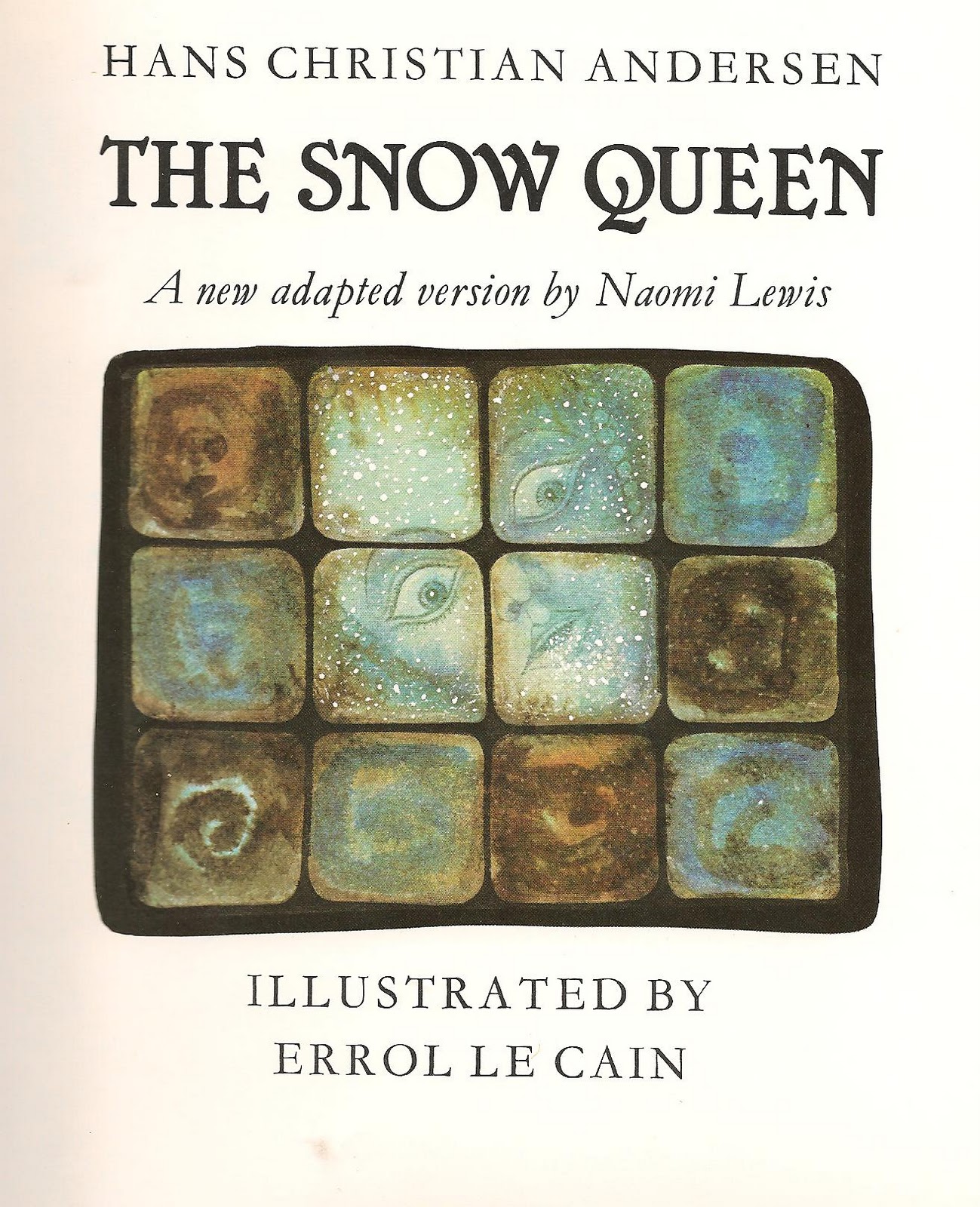
THE SNOW QUEEN


Hans Christian Andersen’s “The Snow Queen” has haunted me all my life, so I was delighted when Kath gave me an excuse to revisit this one. It’s a fairly complex fairytale, with its story of Kai who gets a splinter of the devil’s mirror in his eye, rejects his sweetheart Gerda, and runs away with the Snow Queen. But like all the old tales, there are layers of meaning hidden under the story too. I think that’s what makes them endure over the years, so I hope you’ll be interested in my personal interpretation.

As a little girl I enjoyed the story mostly for its adventure and magic. Living in the southwest of England, Torbay in Devon, where we seldom see snow even in the coldest winters, I also liked the otherworldly beauty of the snowy mountains and the enchantment of the Snow Queen’s ice palace – see, I was a budding fantasy writer even then! I remember the book I owned as a child (now sadly lost) had a beautiful full-colour picture of the Snow Queen dressed in white fur, driving her sleigh pulled by prancing white horses with silver bells on their harness through the Northern Lights across a winter’s sky. Being pony crazy, I think it was probably these horses that drew me to the story initially. I never much liked later versions where the horses were replaced by reindeer or swans, or – as in the DVD version I have starring Bridget Fonda – an engine! Talk about destroying the magic…

But back to the story. As soon as I discovered that in this fairytale it is the boy – Kai – who gets kidnapped, and the girl – Gerda – who sets out on a quest to rescue him, I was hooked. After all those sugary little princess stories, here was a true heroine setting out on her own adventures! (I was Gerda, of course.) My memory of the actual adventures Gerda had on her quest is hazy, and I know these are often edited for simplicity, so maybe that’s why. The version of the tale I re-read for this post has Gerda encountering a witch living in a cottage in the woods who tries to keep her as her own little girl, then a princess with a long line of suitors seeking her hand who tries to marry her off, followed by a robber girl who supplies her with a reindeer, and finally two old women – a Lapp and a Finn – living alone in the snow, who feed and warm Gerda on her journey. The DVD version leaves out the Lapp and Finn women entirely, linking each of Gerda’s encounters to a different season so that she journeys through spring, summer, and autumn to find winter and the Snow Queen. I don’t think the details really matter. However, I do think that, on a deeper level, Gerda’s quest represents the stages of womanhood she will travel through in the world and perhaps that’s why this fairytale speaks to me so strongly.

This is how I see Gerda’s journey:

Spring – In the witch’s cottage, Gerda is cared for and allowed to play in the garden but is forbidden to step outside the gate into the dangerous wood. The witch banishes all the roses that might remind her of Kai and does everything she can to keep the little girl from continuing her quest. Having a clingy mother myself, I can identify only too well with this stage. Even now, my mother seems unable to accept that I might want to open that gate and have adventures of my own in the big wide world.

Summer – At the Princess’ palace, Gerda at first thinks Kai is the prince, and is disappointed when he turns out to be a stranger. In my DVD version a line of charming suitors try to win her hand, but Gerda rejects them all and escapes. This season represents the young and fertile woman chased by boys and making herself beautiful for them. It seems summer will last forever, with its dances and its roses and its declarations of love. But it is over all too soon.

Autumn – Here, I see the robber girl and her bandit mother representing the menopause, when a woman has finished with being a wife and mother and is beginning to find her own way in the world, coming into her power. It might be the autumn of her life, but autumn is a period of fruitfulness and harvest where the seeds sown in spring that blossomed in summer are ripening. Here, Gerda finds strength she didn’t know she had and escapes by riding the robber girl’s reindeer.

Winter – The Finn and Lapp women, living alone in their modest, cosy houses isolated in the snow, represent old age. They help Gerda, but warn her that if she chooses to continue her quest she must leave the reindeer and go on alone. This last part of her journey represents death, which everyone must face alone.

Finally, Gerda reaches the Snow Queen’s palace, where she finds Kai trying to form a word out of shards of ice. The word is LOVE, but Kai’s heart has been turned to ice by the Snow Queen’s kiss, and the splinter of the devil’s mirror in his eye means he cannot complete the puzzle. (In the DVD version, Kai’s task is to reassemble the actual mirror). Of course he cannot do it, until Gerda kisses him and melts his heart. He weeps with joy at seeing her, and the splinter comes out of his eye. Like all fairytales, it is a happy ending. Kai completes his impossible task, winning his freedom from the Snow Queen, and the two young people return to their rose garden, where (one imagines) they got married and had a gloriously happy life bringing up their own children with the advantage of the lessons they have both learnt… I like to think so, anyway!

The splinter in Kai’s eye is a powerful image. The devil – or hobgoblin or elf – made this mirror to reflect beautiful things as ugly and make ugly things seem normal. It’s very true that the way you look at something can change completely the way you see life, and I’ve certainly gone through phases myself when a splinter of the devil’s mirror gets lodged in my eye, and I have to make a conscious effort to squeeze it out before I can see the good around me. Breaking a mirror is also very symbolic, bringing seven years of bad luck according to some. I broke a mirror five years ago… of course I’m not superstitious AT ALL, and greater forces than a broken mirror have influenced my life over the past five years… but I’ll admit I’m looking forward to 2012.

So where am I on Gerda’s quest? Somewhere between leaving the princess’ summer palace and being ambushed by the robber girl, I fear – though, of course, the heroine’s journey changes depending upon the version being told. Perhaps the best thing about being an author is that we can create our own adventures, and – better still – our very own fairytale ending.

Here I must leave my journey with the Snow Queen before the “too much scrolling” bit kicks in. Call me a romantic, but there’s only one ending I really want… you’ve probably already guessed it… and they all lived happily ever after!


Friday, 15 October 2010

Fairytale Reflections (5) Kate Forsyth

One of the very best things about having started this blog – almost a year ago now – is the friends I’ve made because of it. One of these is the Australian fantasy writer Kate Forsyth, who emailed me way back in February to say she thought we might have a lot in common – and do we just!


For a start, I discovered that Kate, whose books until then I’d unaccountably not picked up although I’d seen them everywhere – had read and loved almost the identical set of childhood books that I had. It was as if we had been leading parallel reading lives, on opposite sides of the globe. She sent me her book ‘The Puzzle Ring’ (which I reviewed here) and I was swept away not only by the drive of the narrative and the delicate strength of the writing, which reminded me of Elizabeth Goudge’s children’s fiction, but by the deep knowledge Kate has of British folk-and-fairylore. Who but Kate would send the Blue Men of the Minch to endanger her heroine on a perilous sea crossing? Or give us a glimpse of the terrifying Nuckelavee in a throng of the faery folk under the hill –

One of the most awful sights was a creature like a centaur, except that it had no skin. Hannah could clearly see the knotted muscles and blue, pumping veins running all over its body. The man-figure upon its back carried a spear in its long, skinless arms, which it beat in time to the jester’s song.

If there’s anything better than discovering an author with whose books one is utterly in tune, it’s discovering a friend, ditto. With a happy sigh, I sat back to read my way through Kate’s books – which will take a while, since she’s the bestselling author of over twenty titles. Her first book was named a Best First Novel of 1998 by Locus Magazine, and since then she’s been shortlisted for many awards, including a CYBIL Award in the US and the Surrey Book of the Year award in Canada. In 2007, five of her Chain of Charms series were jointly awarded the 2007 Aurealis Award for Children’s Fiction.


When Kate came to London this year in the early summer, we were able to meet – and talked nineteen to the dozen for the entire afternoon about faeries, folklore and fantasy. And so I feel as though I’m only continuing that conversation as I step back to allow her to tell you about a fairytale with much personal resonance for her, which is the basis of her next (adult) novel. It is the fairytale of –


RAPUNZEL


Rapunzel is one of the most mysterious and enduring of all fairytales, telling the story of a young girl sold to a witch by her parents for a handful of bitter green herbs. 

The witch locked her in a tower deep in the forest and visited her by commanding, ‘Rapunzel, Rapunzel, let down your hair, so I may climb the golden stair’. One day a prince, entranced by Rapunzel’s singing, called up the same rhyme to the imprisoned girl who lowered her hair to him. He climbed up to her room and they fell in love at first sight. Before the prince can help her escape, the witch discovers their tryst and banishes Rapunzel to the wilderness where she gives birth to twins (who are later cut from the story by the Grimm Brothers who found the babies hard to explain to a young audience). The prince is cast down from the tower and blinded by thorns, but Rapunzel finds him and her tears miraculously heal his eyes so they can live happily ever after. 


I have been fascinated by the Rapunzel tale ever since I was a child myself, and I am now working on a novel called Bitter Greens which retells the fairytale as a historical novel set in Venice and northern Italy in the 17th century and France in the 18th century. 

When I was two years old, I was savaged by a dog and ended up with terrible head injuries that resulted in meningitis (infection of the membranes that surround the brain) and encephalitis (a life-threatening inflammation of the brain). I was very ill for months, spending most of that year in hospital and ending with dreadful scars all over my head (thankfully most of them are hidden by my hair). I had half of one ear torn off and my left tear duct was destroyed, and with it my ability to control my tears. My eye wept all the time. 

As a result, I was in and out of hospital for the next six or seven years, half-blind and racked with fever. I used to lie in my hospital bed, all alone in an empty children’s ward at the Sydney Eye Hospital, staring with my one good eye out the window. All I could see was a high green hill, crowned with an ancient Moreton Bay fig tree and the sandstone wall of the Art Gallery of NSW. It looked like a castle. I used to imagine myself galloping away over the hill, on my way to marvellous adventures. 

I think my fascination with Rapunzel began with my own entrapment in that lonely hospital ward. Again and again I write about people imprisoned in towers and dungeons, longing to be rescued. It is a recurring motif in my novels, most recently in my fantasy adventure for children, The Wildkin’s Curse, which tells the story of a wildkin princess kept captive in an impossibly tall crystal tower, telling stories to try and free herself.

I love the story of Rapunzel because of the ardent love affair between the imprisoned girl and the prince who rescues her, and because of the miraculous healing of the prince’s eyes by Rapunzel’s tears. Rapunzel begins as a powerless child-like victim but by the end of the story she has become a magical agent of healing and redemption. 

Most people think that Rapunzel was first told by the Grimm Brothers in the early 19th century, but in fact it is a much older story than that. 

There are numerous Maiden in Tower stories in cultures all around the world, so many it has its own classification in the Aarne-Thompson fairytale motif index, Type 310. The first may well be from Christian iconography, with the story of Saint Barbara, a virtuous young girl locked in a tower by her father in the 3rd century. She was tortured for her beliefs, but all her wounds were miraculously healed overnight and in the end she was beheaded by her own father, who was then struck by lightning and killed. 

The very first time the motif of the ‘hair ladder’ appeared in a fairy story was in a 10th century Persian tale told by Ferdowsi (932-1025 AD), in which a woman in a harem offers to lower her hair to her lover, Zal, so he can climb up to her. He is afraid he might hurt her and so throws up a rope instead. 

The ‘hair ladder’ reappears in the story, Petrosinella, in the mid 17th century, as part of a collection of literary fairy tales told by a Florentine writer, Giambattista Basile. His collection, Lo cunto de li cunti (The Tale of Tales), was first published in 1634-36 and told the story of a princess who could not laugh. Various storytellers gathered to tell her stories in the hope they can amuse her, including one who tells the story of a girl, Petrosinella (Little Parsley), who is given up to an ogress after her mother steals parsley from the ogress’s garden. The ogress locks Petrosinella up in a tower in the forest, using her hair as a ladder to access the building. Petrosinella escapes with the help of a prince who heard her singing, overcoming the ogress by casting three magical acorns behind her that turn into obstacles that impede the witch and ultimately devour her. 

Sixty years later, the story appears again, this time in France. It is told by a woman writer, Charlotte-Rose de Caumont de la Force, who has been banished to a convent after displeasing the king, Louis XIV, at his glittering court in Versailles. Locked away in a cloister, much like Rapunzel is in her tower, Charlotte-Rose was among the first writers to pen a collection of literary fairy tales and one of the world’s first historical novelists. Published under a pseudonym, Madame X, Charlotte-Rose’s tales became bestsellers and she was eventually able to buy her release.
In Persinette, her version of the tale, the mother conceives an insatiable longing for parsley which her husband steals for her from a sorceress’s garden. Caught by the sorceress, he promises her his unborn daughter who the sorceress collects at the age of seven. Persinette is raised by the sorceress until she is twelve and then locked away in her tower (though the sorceress treats her gently and brings the child everything she could possibly want.) In time she becomes a woman; the prince hears her singing and chants the rhyme so he can climb up the ladder of hair to her room, where he seduces her (“he became bolder and proposed to marry her right then and there, and she consented without hardly knowing what she was doing. Even so, she was able to complete the ceremony” is how Charlotte-Rose rather coyly describes his seduction.)

Persinette becomes pregnant as a result, and in her naivety betrays herself to the sorceress when she complains about her dress growing tighter. The Grimm brothers later changed this to Rapunzel complaining about how much heavier the witch is than her prince, which at a single stroke makes Rapunzel seem extremely stupid.

Then Charlotte-Rose changes the ending so that the prince is blinded, Persinette bears twins in the wilderness, and then heals her lover’s eyes with her redemptive tears. The sorceress continues to torment them, until the young couple’s courage and tender love for each other move her to mercy and she magically returns them to the prince’s loving family.

This story was then retold in Germany by the German author Friedrich Schulz, which is almost identical to Charlotte-Rose’s story except that he changed the girl’s name to Rapunzel, perhaps because it is prettier than parsley. A rapunzel plant is a type of wild rampion. It was then retold by the Grimm Brothers in their 1812 fairytale collection, becoming less powerful, dark and sexy with each edition until we have the tale that most children know today (soon to be retold once again, and released as a Disney cartoon.)

It is Charlotte-Rose and her version which provide the inspiration for my book. She was a fascinating woman – strong-willed, intelligent and fiercely independent – who once rescued her lover from imprisonment by going into his parent’s castle with a travelling troupe of performers disguised as a dancing bear! How could I not write a book about her?


Friday, 8 October 2010

Fairytale Reflections (4) Mary Hoffman

Many people imagine that writing fantasy must somehow be easier than writing realistic or historical fiction. After all, you don’t have to do any research, do you? You just make it all up out of your own head, don’t you? Well, um, no. To be convincing, any fantasy world needs roots in reality – and Mary Hoffman’s wonderful books are an excellent example. A great deal of careful research goes into her fantasies, the well known ‘Stravaganza’ series – as well as into her YA historical fiction like the highly acclaimed ‘Troubadour’, set in the Languedoc at the time of the Albigensian Crusade.

The ‘Stravaganza’ series, beginning with ‘City of Masks’, is set partly in our modern world and partly in an alternate universe’s 16th century Italy: ‘Talia’, which can be reached by cross-dimensional travellers – ‘Stravaganti’ – who are in possession of certain talismans. Each book is set in a different Talian city, based closely on real Italian cities well known to the author. I love the blend of the modern and the exotic in these stories, which besides being magical fantasies also deal with strong emotional themes of illness and death, bullying and persecution.

I think my favourite of the Stravaganza books may be – by a squeak – ‘City of Stars’ in which the heroine Georgia, whose life is made all-too-believably unhappy by her bullying stepbrother, finds the talisman of a little winged horse which takes her to the Talian city of Remora where a dramatic horserace is run. (Anyone who has been to the real Italian city of Siena and experienced the crazy bareback horserace called the Palio will appreciate Mary’s skilfully woven mesh of reality and fantasy.) Here Georgia meets young Cesare – whose beautiful mare Starlight has just given birth to a foal:

The filly was not just dark with the waters of birth, but black, black as the night outside, where the bells of the city’s churches were striking midnight…


The stable door, left ajar by Paolo, moved in a sudden gust of wind. A shaft of moonlight fell across the stall. Cesare gasped.


The little long-legged filly, pulling at her mother’s teat, was rapidly drying in the warm night air. Her coat was a glossy black and she was clearly going to be a first-rate race-horse. But that was not all. As she tried her new muscles, gaining confidence in her spindly legs, she flexed her shoulders and spread out two small damp black wings about the size of a young swan’s.

Mary is an artist to her fingertips – and the most generous of colleagues and friends. Perhaps her choice of fairytale is a case of the attraction of opposites? At any rate, at the bottom of this post you’ll find a brief biography written by herself with characteristic grace and wit. You’ll see why it’s there (and not here) when you’ve read when she has to say about her Fairytale Reflection choice –


THE FISHERMAN AND HIS WIFE
I’m a great believer in the idea that everyone has their own personal myth or, if you like, fairy tale. It doesn’t mean it’s your favourite or that you particularly admire it. It’s more the case that it speaks to you, possibly uncomfortably, about an aspect of your own character or personality, so that you think perhaps the originator of the tale knows you, or someone very like you.


For me this story is The Fisherman and his Wife. I have re-told it myself, in The Macmillan Treasury of Nursery Stories, which I was invited to write for the new millennium. (This was a huge treat in itself, let alone getting a chance to re-tell my “signature tale”). I went back to the original in the Brothers Grimm but then, as with all the stories, allowed myself to expand and embroider it a bit.

This is the basic story:
A childless couple – a fisherman and his wife – were so poor they lived in a pigsty. Every day the man would try with his rod and line to catch a fish in the sea; if he succeeded, they had a fish supper, if not, they went to bed hungry.

One day he caught a flounder who begged to be thrown back, because he was a prince under an enchantment. In my version, the fisherman says, “I wouldn’t eat anything that talked anyway.” He goes home fishless but tells his wife about the adventure. She upbraids him for asking nothing in return for sparing the enchanted prince’s life. “Oh of course we have everything we could wish for, living in a pigsty!” she rants and sends him down to the seashore to ask for a cottage.

The magic flounder grants her wish and the fisherman’s wife is contented for a while but soon wants a castle and gets that too. There is a progression from real estate to personal glory for the wife, who becomes in turn King, Emperor and Pope. Every time the fisherman has to ask the flounder for something grander, he feels more wretched and the sea becomes stormier and of a more livid hue.

Finally, the wife demands control over the rising and setting of the sun and moon – to be, in fact, God.

‘There was a huge clap of thunder and then the storm stilled and the sea was like clear glass.

“Go back,” said the flounder, “and you will find her in the pigsty, as before.”

And there in the pigsty the fisherman and his wife are living to this day.’

So, ambition, greed and an inability to know when to stop on the part of the wife and a certain supine biddability on the part of the husband. How could this be my personal motif story?

It’s about living in the moment, appreciating what you’ve got and not wishing your life away. All of us who write are hungry for a certain amount of fame and fortune. We want people to buy and read our books in large numbers; we’d be happy to be offered film deals; if people recognised our names and said “I LOVE your books – I have all of them!”, we could cope.

It’s not really about material goods and power (although I, for one, would not turn down a villa in Tuscany); it’s more about validation, I think. We pour our creativity and imagination into creating new worlds for readers to inhabit. If we are lucky, a publisher likes what we do well enough to launch it on the world in the form of a printed book.

And what happens after that is subject to vagaries of the market and of Marketing, the trends making up the zeitgeist, the whims of fortune and the lucky spin of the wheel. So we tend to crave more and more. Yes we have a lovely review in the Times or the Guardian but what are the sales figures like? We get short-listed for a prize but don’t win it. We have a publishing advance we feel happy about until we hear someone else has one twice the size.

Worse still, a fellow-author, whose work we think secretly (or not so secretly) is inferior to our own, gets loaded with plaudits and has their books turned into hugely successful Hollywood films. We smile warmly like an Oscar nominated also-ran but really inside we are like the fisherman’s wife: we want more!

And we forget that there are literally thousands – possibly millions – of would-be writers out there who would kill for just one contract, or to be represented by an agent. That, for the long-term published writer is about cottage-level in terms of flounder gifts.

So I try to go back into that little cottage, which I made as cosy and desirable in my version as I could, with an orchard of fruit to turn into jam and a flower garden in front. (I wrote this round about the time we left London and bought our present barn-conversion in Oxfordshire. It’s bigger than a cottage but it does have roses round the door and a plum tree whose annual crop gets converted by a kind of alchemy into something you can spread on a  crumpet).

My lovely illustrator gave the couple’s cottage a thatched roof, which I wouldn’t touch myself, but I bestowed on them green and white crockery, of which I am inordinately fond, and a yard full of ducks and chickens, which I am not allowed.

Yes, a castle might be nice, but would I really want to choose all the curtain-poles and light-fittings for so many bedrooms? The fisherman, who is also me of course, feels very uncomfortable about the castle and all the servants and the four-poster bed.

I have several pacts with different friends about how we would not let success – I mean  wild, ridiculous millionaire-style success – go to our heads and change how we behave to other people, especially other writers. We have seen it happen.

Not perhaps the desire to be Pope but a tendency to pontificate. Not a demand to stop the sun in the sky but perhaps a forgetting that we are poor creatures of dust, whose life on this earth is but a speck viewed in the context of eternity.

So that’s why The Fisherman and his Wife is my signature tale. It is a reminder to stop and enjoy the distance I have travelled from the scholarship girl who scribbled plays and stories in school exercise books, to bask in my cosy cottage stage of life and be excited by glimpses of distant castles but not to let ambition prevent me from living in the moment and taking a proper pride in my achievements without constantly hungering for more.

After all, in my line of work, next year could see one back in the metaphorical pigsty, even if one didn’t want to play God.*
  
*A little secret for non-writers: when you create worlds and people them with characters, you do have a certain Godlike power. Maybe that’s why most of us can stop short of going too far in our ambition. We have all we need in our heads and hearts and count ourselves kings of infinite space, even though we have had dreams – because we have had dreams.

Biography
Mary had her first book published in 1975, which would have provided her with a fish supper had she not already been a vegetarian. She and her husband have never lived in a pigsty, though it was a long time before they could afford carpets in the house they bought to raise their three daughters in.

She has now had over ninety books published, with more in the pipeline, including the successful but not quite castle-providing Stravaganza sequence for Bloomsbury, stand-alone historical novels like The falconer’s Knot and Troubadour. She also writes picturebooks like Amazing Grace and its sequels, which are reputed to have sold over a million and a half copies, which you would have thought might be worth a turret or two.

She has never had a film deal or won a major prize but is not bitter.